
Fifteen years ago, the Affordable Care Act (ACA) reshaped healthcare with three big goals:
- Expand access
- Control costs
- Improve quality
It was a transformative moment that flipped the script for healthcare communications strategy planning. Messages shifted from technical policy speak to accessible, audience-first narratives. Patients became informed consumers. Digital tools became core to engagement. Outcomes—not services—became campaign centerpieces.
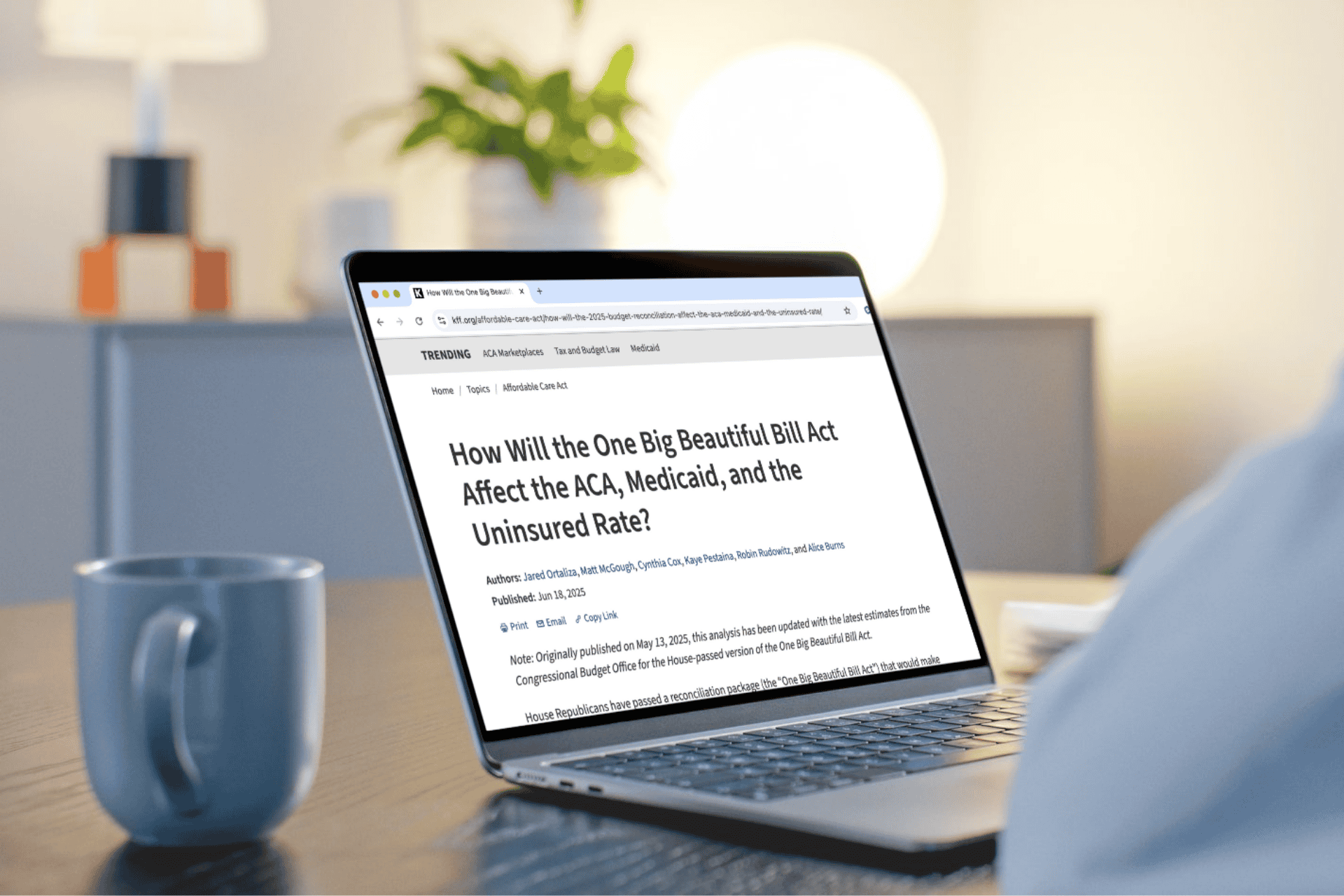
Now, with the One Big Beautiful Bill Act (OBBBA) becoming law, those same three aims are back in the spotlight, but the pressures, trade-offs, and talking points are different. Here’s what healthcare communicators need to understand about how OBBBA will shape the conversation around access, cost, and quality—and how to help audiences navigate it.
Access
Access is the foundation of the ACA’s aim. The law recognized that without affordable, reliable coverage, the rest of the healthcare system’s goals—lower costs and better quality—would falter. Expanding Medicaid, subsidizing the Marketplace, and introducing consumer protections were all designed to make coverage possible for people who had historically been shut out. For healthcare communicators, that meant helping people understand new eligibility rules, finding the right plan, and taking the first step toward getting care.
ACA’s aim: Cover more people by expanding Medicaid, subsidizing the Marketplace, and safeguarding coverage.
OBBBA’s impact: Coverage is expected to contract. KFF estimates that policy changes in OBBBA could increase the number of uninsured by more than 15 million people over the next decade—7.8 million from Medicaid changes, 3.1 million from Marketplace cuts, and 4.2 million more if enhanced subsidies expire.
One of the most significant changes is the introduction of Medicaid work requirements: 80 hours per month of work or community engagement. While many Medicaid recipients already work, these requirements add new documentation hurdles. In Arkansas’s 2018 work requirement program, 95% of those who lost coverage were still eligible but failed to navigate the reporting process successfully. This suggests the biggest access barrier may not be eligibility, but the administrative complexity of proving compliance.
OBBBA also includes targeted efforts to close rural coverage gaps, such as new funding for telehealth expansion and rural clinic capacity. However, these potential gains are likely to be overshadowed by the overall rise in the uninsured rate, which will make it harder for many communities to maintain consistent care access.
What it means for your healthcare communications strategy:
-
-
- When speaking to consumers, clearly explain both the rules and the process for maintaining coverage, particularly documentation requirements.
- Balance messaging about rural access improvements with honest context about projected overall coverage declines.
- Use stories to humanize how paperwork and bureaucracy—not just policy eligibility—can push people out of the system.
-
Cost
The ACA sought to curb the growth of healthcare spending by reducing uncompensated care, placing an emphasis on preventive services, and rewarding efficiency. The idea was that more people covered meant fewer unpaid hospital bills, more predictable revenue for providers, and less cost-shifting to those with insurance. Communicating these connections helped audiences see how expanding coverage could benefit the system as a whole.
ACA’s aim: Reduce system-wide burdens by expanding coverage and reducing uncompensated care.
OBBBA’s impact: Federal savings under OBBBA—$793B from Medicaid and $268B from Marketplaces—come largely from fewer people being covered. While that reduces federal outlays, it shifts costs elsewhere in the system.
Hospitals and providers often point out that Medicaid reimbursement rates are lower than commercial rates, but payments from uninsured patients are much lower still—sometimes pennies on the dollar. As uncompensated care grows, hospitals (including rural and safety-net facilities) could face difficult decisions, including service reductions or closure. As the Employer Coverage analysis explains, “this decrease in provider revenue is likely to threaten hospital viability, especially in rural and poor communities. Decreased hospital competition leads to more provider negotiating leverage and higher prices for employer-sponsored health plans.”
In practical terms, that means employers could face higher premiums as commercial insurers absorb and redistribute the cost of rising uncompensated care. Rural closures or service reductions could accelerate these dynamics by concentrating market power among fewer providers.
What it means for your healthcare communications strategy:
-
-
- Help audiences understand that “cost savings” at the federal level can translate into cost increases elsewhere.
- Prepare employers for potential premium hikes tied to systemic cost shifting.
- Explain how hospital closures and reduced competition can impact local care access and affordability over time.
-
Quality
When the ACA broadened access, it also changed how care was paid for—moving away from fee-for-service so providers were incentivized to focus on results, not just volume. The law tied reimbursement to outcomes, patient satisfaction, and safety measures, encouraging providers to coordinate care and invest in prevention. For communicators, this was a shift from promoting services to telling stories about value—how better coordination, preventive care, and patient-centered approaches could lead to healthier populations.
ACA’s aim: Improve quality through payment reform, better care coordination, and incentivized outcomes.
OBBBA’s impact: While the law doesn’t directly dismantle ACA quality measures, its broader changes are likely to affect how patients experience and perceive care quality.
More uninsured patients can mean delays in care when people wait until conditions worsen before seeking treatment. This can result in poorer outcomes and more complex interventions when people finally enter the system. At worst, this dynamic puts a strain on provider capacity, particularly in communities with already limited staffing and resources.
Additionally, if financial pressures force rural hospitals to close or reduce services, the impact goes beyond access—it changes the nature of care. Patients may have to travel further, wait longer for appointments, or settle for reduced local services. Over time, these changes can alter trust in the system and affect perceptions of care value and quality.
OBBBA also promotes alternative coverage models, such as Individual Coverage Health Reimbursement Arrangements (ICHRAs), which give employers funds for workers to buy their own plan on the individual market instead of offering a group plan. While this can mean more flexibility, it can also disrupt continuity of care if employees must switch to plans with different networks or benefits—especially for those managing chronic conditions. Navigating the individual market can be challenging for employees who are used to employer-sponsored coverage. Confusion about networks, formularies, and costs may delay preventive care or cause gaps in treatment, undermining quality goals. Over time, changes around those who opt for ICHRAs versus traditional plans could affect market stability, premiums, and access to high-quality providers.
What it means for your healthcare communications strategy:
-
-
- Be transparent about potential trade-offs in new plan options, explaining benefits and limitations in plain language.
- Educate communities on the importance of preventive care, especially for populations at risk of losing coverage.
- Use messaging that addresses both logistical and emotional aspects of care quality—trust, continuity, and relationship with providers.
-
Looking ahead
The ACA ushered in an era of massive change, redefining how healthcare was delivered, paid for, and communicated. OBBBA shifts the dynamics once again—but the role of healthcare communications hasn’t changed. Our profession is still tasked with making the complex understandable, connecting policy changes to real-world impact, and helping audiences navigate uncertainty.
At Activate Health, we’ve done just that. We’ve guided organizations through every major healthcare policy shift over the last 15 years. Our team combines deep industry expertise with strategic communications insight to help healthcare brands adapt, stay ahead, and lead the conversation. Contact us today to learn how we can help you prepare for what’s next.